Alpha-GPC in Neuro Sharp: Choline, Memory Research and a Safety Signal
Alpha-GPC is a highly absorbable source of choline, the building block of acetylcholine. It's popular in nootropic formulas, prescribed for dementia in some countries — and the subject of a large 2021 study that found a link with stroke. Here's the full picture.*
See Neuro Sharp Prices →Independent site · We may earn a commission from links. Disclosure
| Full name | L-alpha-glycerylphosphorylcholine (choline alfoscerate) |
|---|---|
| Type | Choline compound |
| Role in Neuro Sharp | Supplies choline for acetylcholine* |
| Amount in studies | Up to 1,200 mg/day in dementia trials |
| Evidence | Limited; mostly in people with dementia |
| Main caution | Observational link with higher stroke risk (2021) |
What Is Alpha-GPC?
Alpha-GPC is a natural compound found in small amounts in the body and in foods. It is a source of choline, an essential nutrient. Your body uses choline to build cell membranes and to make acetylcholine, a messenger involved in memory, attention and muscle control. Alpha-GPC is about 40% choline by weight and is thought to deliver choline to the brain efficiently. In some countries it is available as a prescription medicine for cognitive decline.
How Much Choline Do You Need?
The NIH Office of Dietary Supplements sets an Adequate Intake of 550 mg of choline a day for adult men and 425 mg for adult women, with an upper limit of 3,500 mg a day for adults. Eggs, meat, fish, dairy and legumes are good food sources. Most of your choline should come from food; supplements add to that total.
What the Research Says
Most Alpha-GPC studies were done in people with Alzheimer's disease or vascular dementia, often at 1,200 mg a day, and several reported improvements on cognitive scales. There is far less research in healthy adults. More broadly, ODS notes that the evidence on choline and cognition is mixed: some small trials found improvements, while a 2015 systematic review found choline supplements "did not result in clear improvements in cognition in healthy adults."
The 2021 Stroke Study
In 2021, researchers published a large study in JAMA Network Open using South Korean national health records for more than 12 million adults aged 50 and over. People who used Alpha-GPC had a higher risk of stroke over 10 years than matched non-users — an adjusted hazard ratio of 1.43 after matching, and the authors summarized this as roughly a 46% higher risk in the full cohort.
Important caveats from the authors themselves:
- It is an observational study, so it shows an association, not proof that Alpha-GPC causes stroke.
- Alpha-GPC users were older and had more health conditions, and may already have had early blood-vessel changes.
- The mechanism is unclear; one proposed pathway involves TMAO, a compound produced when gut bacteria break down choline.
The study used national prescription records, so it describes prescribed Alpha-GPC rather than over-the-counter supplements. Even so, if you have had a stroke or TIA, or have significant cardiovascular risk factors, discuss Alpha-GPC with your doctor before taking Neuro Sharp.
How Much Is Used in Studies?
Dementia trials commonly used 1,200 mg a day (400 mg three times daily). Nootropic products often contain 150–600 mg.
Side Effects and Interactions
Reported side effects include headache, heartburn, dizziness, insomnia and skin rash. Alpha-GPC may add to the effects of medicines that increase acetylcholine (including some Alzheimer's drugs) and oppose anticholinergic medicines. Its effects combine with Huperzine-A in Neuro Sharp, so don't add other choline or Huperzine-A supplements on top.
Alpha-GPC's Role in Neuro Sharp
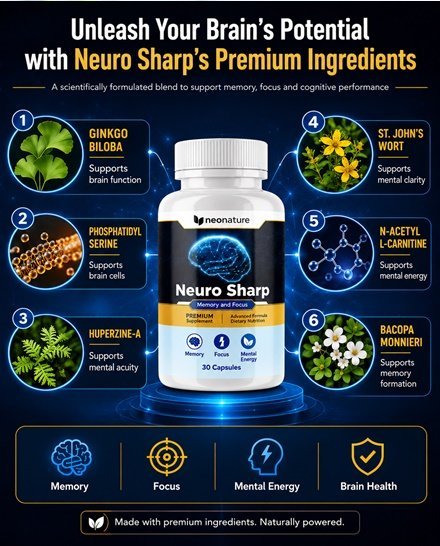
Alpha-GPC is the "supply" half of Neuro Sharp's acetylcholine strategy, while Huperzine-A is the "preserve" half. Together with Bacopa, they form the formula's memory pathway.
Bottom Line
Alpha-GPC is an efficient choline source with some evidence in dementia, limited evidence in healthy adults and an unresolved safety signal from a large observational study. For most healthy adults it's likely low risk at modest doses, but people with cardiovascular risk should check with a doctor.*
Sources
- Lee G, et al. Association of L-α Glycerylphosphorylcholine With Subsequent Stroke Risk After 10 Years. JAMA Netw Open, 2021 (PMC)
- NIH Office of Dietary Supplements: Choline — Health Professional Fact Sheet
Frequently Asked Questions
What is Alpha-GPC?
A compound that supplies choline, which the body uses to make acetylcholine, a messenger involved in memory and attention.
Does Alpha-GPC increase stroke risk?
A large 2021 observational study in South Korea linked Alpha-GPC use with higher stroke risk, but it couldn't prove cause and effect.
How much choline do adults need?
The NIH sets an Adequate Intake of 550 mg/day for men and 425 mg/day for women, with an upper limit of 3,500 mg/day.
How much Alpha-GPC is used in studies?
Dementia trials commonly used 1,200 mg per day.
*These statements have not been evaluated by the Food and Drug Administration. Neuro Sharp is not intended to diagnose, treat, cure or prevent any disease. Individual results vary. This page is for information only and is not medical advice.